Every SWAT operator understands one simple truth: entering an unknown building is one of the most dangerous phases of any tactical operation.
Whether responding to a barricaded suspect, executing a high-risk warrant, searching for an armed fugitive, or managing a hostage situation, officers often have limited information before making entry. Blind corners, concealed suspects, improvised barricades, and multi-story layouts all increase operational risk.
Today, many tactical teams reduce that uncertainty by deploying robots before personnel enter the structure. Modern throwable tactical robots provide real-time intelligence, allowing commanders to evaluate threats, verify room layouts, and adjust operational plans while keeping officers at a safer distance.
As robotic technology continues to evolve, SWAT robot building clearing has become a standard consideration for agencies seeking to improve officer safety and operational efficiency.
A Real-World Example: Five Hours of Continuous Tactical Support
Imagine a tactical callout at a multi-story commercial building.
Officers know an armed suspect may still be inside, but they don’t know exactly where. Rather than immediately committing personnel to an uncertain environment, the SWAT team deploys a tactical robot.
The robot enters first, transmitting live video while navigating hallways, rooms, stairwells, and obstacles. Throughout the operation, commanders maintain continuous situational awareness without exposing officers to unnecessary risk.
According to Innvotronics, one agency successfully deployed its MK-8 tactical robot for approximately five hours during a single operation, demonstrating the value of reliable robotic reconnaissance during extended tactical incidents. The robot continued providing intelligence while reducing the need for repeated officer exposure throughout the deployment.
This example illustrates how robotic systems can serve as force multipliers during prolonged building-clearing missions.
Why Building Clearing Is So Dangerous Without SWAT Robots
Building clearing requires officers to make rapid decisions in environments where visibility is limited and threats are unknown.
Common hazards include:
- Hidden suspects
- Ambush locations
- Blind hallways
- Multiple entry points
- Locked or partially opened doors
- Stairwells
- Low-light conditions
- Unknown civilian locations
- Improvised barricades
Without advance reconnaissance, officers must gather intelligence while simultaneously placing themselves in harm’s way.
Modern tactical robots change that equation.
Instead of sending an operator into an unknown room first, teams can deploy a robot to observe the environment, identify hazards, and relay information back to the command element before making entry.
The result is improved situational awareness and more informed tactical decision-making.
How Tactical Robots Improve Building Clearing Operations
Tactical robots are designed to become the “first officer through the door.”
Rather than replacing SWAT operators, they provide valuable intelligence that helps commanders determine the safest course of action.
Key benefits include:
Improved Situational Awareness
Live video allows operators to inspect:
- Hallways
- Doorways
- Rooms
- Stairwells
- Hidden corners
- Potential threat locations
The more information commanders have before entry, the better they can develop a tactical plan.
Reduced Officer Exposure
Every unnecessary exposure to an unknown threat increases operational risk.
Deploying a robot first allows teams to gather information remotely before personnel enter hazardous spaces.
Faster Decision Making
Real-time intelligence supports quicker tactical decisions.
Commanders can determine whether to:
- Continue clearing
- Establish containment
- Deploy negotiators
- Adjust entry points
- Request additional resources
Better Communication
Many modern tactical robots support two-way audio, enabling operators to communicate with occupants from a position of safety.
This capability can support negotiations, instructions, and compliance efforts without immediate officer exposure.
Types of Robots Used for SWAT Building Clearing
Not every tactical robot is designed for the same operational environment.
Understanding the available options helps agencies choose equipment that matches their mission profile.
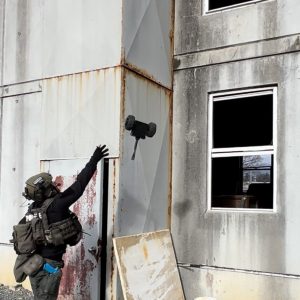
Throwable Tactical Robots
Throwable robots are designed for rapid deployment.
Operators can quickly place them inside structures, allowing immediate reconnaissance without lengthy setup.
Advantages include:
- Fast deployment
- Lightweight design
- Minimal training
- Excellent indoor mobility
- High survivability
These systems are particularly effective for:
- Warrant service
- Barricaded suspects
- Active shooter response
- Building searches
Stair-Climbing Tactical Robots
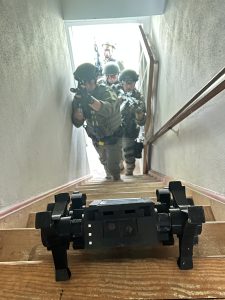
Large buildings introduce additional challenges.
Schools, apartment complexes, hotels, office buildings, and parking structures frequently require movement between floors.
The Innvotronics MK-8 is specifically designed for these environments, combining throwable deployment with eight-wheel stair-climbing capability. This allows operators to maintain reconnaissance as the mission progresses across multiple levels.
Real-World Applications
Modern tactical robots are increasingly used during:
High-Risk Warrant Service
Robots inspect interiors before entry, reducing unnecessary officer exposure.
Barricaded Suspects
Teams maintain visual intelligence while negotiators communicate from protected positions.
School Response
Large educational facilities often contain multiple floors and long hallways.
Stair-climbing robots can support reconnaissance before officers move deeper into the structure.
Commercial Buildings
Office buildings present complex layouts with numerous rooms, staircases, and concealed areas.
Robots provide commanders with continuous intelligence throughout the clearing process.
Apartment Complexes
Multi-story residential buildings often require repeated stair navigation.
Robots capable of climbing stairs help maintain operational momentum while minimizing risk.
How to Equip Your SWAT Team for Modern Building Clearing
Selecting the right tactical robot begins with evaluating your operational environment.
Questions to consider include:
- How often do you clear multi-story buildings?
- Do you need stair-climbing capability?
- Will the robot be deployed during warrant service?
- Is rapid throwable deployment important?
- How important is two-way communication?
- What level of operator training is required?
- What warranty and long-term support are offered?
Agencies should also evaluate lifecycle costs, maintenance requirements, and manufacturer support before making a purchasing decision.
Why More Agencies Are Choosing Innvotronics
Innvotronics designs tactical robots specifically for law enforcement operations, with features developed through collaboration with tactical professionals.
Its robotic platforms emphasize:
- Rapid throwable deployment
- Self-righting capability
- Infrared night vision
- Two-way audio communication
- Field-replaceable batteries
- Rugged impact-resistant construction
- Zero-turn maneuverability
- Mission-specific mobility, including stair-climbing capability on the MK-8
These features are intended to help teams gather actionable intelligence while reducing officer exposure during high-risk operations.

Final Thoughts
Building clearing will always involve uncertainty. However, uncertainty can be reduced when tactical teams have better information before committing officers to dangerous environments.
Modern tactical robots provide that intelligence by entering first, transmitting live video, navigating challenging terrain, and supporting command decisions throughout the mission.
For agencies evaluating robotic technology, selecting the right platform means matching operational capabilities to the environments your team encounters most often. Whether your priority is rapid deployment for standard structure clearing or advanced mobility for multi-story operations, integrating tactical Law Enforcement robotics into your tactical program can enhance situational awareness and support safer decision-making.